Monday, March 23, 2020

National Agriculture Day


March 24, 2020 is National Agriculture Day. National Agriculture Day is conducted by the Agriculture Council of America (ACA) and was created to educate Americans on how their food and fiber products are produced. The following video and infographics are some of the tools ACA uses in promoting National Agriculture Day.


Want to learn more? Visit the Agricultural Sciences Library Guide to see recent additions and recommended resources for Agriculture.
ACC has two programs for Agriculture: one is for transfer/workforce credit and one is for Continuing Education. Visit the departmental websites to see which class/program interests you and check out a 5 minute video of the amazing work done by ACC faculty, staff, and students in the Agricultural Sciences department. The video contains adorable animals and beautifully grown produce born/grown on the ACC Elgin campus!

Monday, March 9, 2020

Leisure Reading for Spring Break

Woman with glasses reading a book
"Luminescence" by Brandon Woelfel is licensed under CC BY 2.0


It’s almost time for Spring Break, and ACC Library Services has a small but mighty collection of leisure books available for checkout. Take a look at the leisure reading section of any campus library to find everything from bestselling fiction to cookbooks, comics, memoirs, and more. Don’t know where to start? Check out the recommendations from our leisure reading team below:

  • Take a dive into the fantastical imagery of Erin Morgenstern’s The Starless Sea, a story about stories, love, and adventure.
  • Check out The Water Dancer, the much-anticipated first fiction novel from author and journalist Ta-Nehisi Coates.
  • Find yourself on a culinary trip through Italy with Giada De Laurentiis’ newest cookbook, Giada’s Italy: My Recipes for La Dolce Vita.
  • Get lost in gorgeous illustrations and prepare to have your heartstrings pulled with Charlie Mackesy’s The Boy, the Mole, the Fox, and the Horse.
  • Phil Stamper’s The Gravity of Us has it all: love, identity, family, and space exploration!
  • If you’re looking for suspense with a touch of folklore and magical realism, look no further than Jennifer McMahon’s The Night Sister.
  • Evie Wyld’s graphic novel Everything is Teeth captures the whimsy of a youthful imagination and sharks. Lots of sharks.
  • Travel to San Francisco without ever having to leave your house with this seriously funny mystery by Christopher Moore, Noir, and travel back in time to Spain in the grips of civil war with Isabel Allende’s new novel A Long Petal of the Sea.
When you’re ready to put the books down, ACC Library Services has your back with its own version of “Netflix and chill.” Browse our catalog to see the thousands of DVD and streaming media titles available, or head over to Films on Demand and Kanopy for more streaming media options.

Monday, February 24, 2020

Celebrate Fair Use Week 2020


Feb. 24 – Feb. 28

Fair use allows you to use copyrighted materials on a limited basis for specific purposes without requiring permission of the copyright holder. Section 107 of the Copyright Act outlines guidance for fair use using all of these 4 factors:

1.   The purpose and character of the proposed use
2.   The nature of the work being used
3.   The amount of the work being used
4.   The effect of the use upon the market for the work

Purpose and Character of the Proposed Use:
-      Purposes that favor fair use include education, scholarship, research, news reporting, criticism, commentary. Commercial or non-profit uses weigh against fair use.
Nature of the Original Work:
-      Published or not published (use of an unpublished is not generally considered fair), factual or creative (borrowing from a factual work is considered more fair). For example, it is easier to prove fair use of facts and statistics than it is to prove fair use of a song, artwork, photograph, movie still or other creative works.
Amount and Substantiality of the Portion Being Used:
-      Using something from the “heart” of the work (less fair), as well as a smaller part of the work (often misquoted as a certain percentage of a work) is considered for fair use. For example, for downloading a chapter from an e-book: the e-book home page usually indicates how many pages may be downloaded at one time for fair use.
Effect of the Use on the Potential Market for of Value of the Work:
-      Will the use substitute for the sale of the work? For example, if the 5th edition of a collection of short stories omits a story which was included in the 4th edition, making a copy of that short story from the 4th edition would affect the potential market for the work and not qualify for fair use.

The “fifth factor” of fair use to consider is transformative use, raised in a 1994 Supreme Court decision, Campbell v. Acuff-Rose Music. A derivative work is considered as transformative if it uses the original work in completely new or transformative ways. Examples include a parody of the original work, thumbnails used for searching, some audio/visual remixes.

If a work has a Creative Commons (CC) license, it accompanies the copyright. This means that the copyright owner retains copyrights for the work but will allow use of the work according to the CC license. A CC-BY license, for example, means you may use the work without obtaining copyright holder permission as long as you attribute the source or author of the work.

Frequently Asked Questions:
From Faculty - Can I post electronic resources in Blackboard or my ACC website?
Instructional materials may be posted to a course management system or a course website under any of the following:

  • The faculty member is the owner of the copyright in the material,
  • The material is made available by linking to rather than copying,
  • The copyright owner of the material grants permission,
  • The material has been designated open access by the copyright owner,
  • The material is in the public domain, or
  • The use intended of the material falls within fair use under copyright law or under another copyright exception.

From Faculty and Students - How may I legally use film and images?


Face-to-face Classroom Instruction

Audiovisual materials may be used in classrooms as part of regular face-to-face classroom instruction without seeking the copyright owner's permission for performance or display. As such, the presence of a faculty member or teaching assistant is required at each class meeting/audiovisual showing in order to satisfy the "face to face" teaching exceptions contained in Section 110 of the Copyright Act.

Use by Groups, Student Life, or Clubs

Clubs and other groups who wish to use audiovisual materials in classrooms or at student events must first obtain public performance rights for those materials from the copyright owner, unless those rights were purchased along with the materials -- often the case with institutional purchases from educational vendors (e.g. Films on Demand or Kanopy - streaming films available through A-Z Databases, ACC Library Services). Some music and video apps specifically state that they cannot be used in the classroom for face to face instruction or for events. Check the terms and conditions or ask for assistance.
More information on Fair Use and Copyright at ACC - https://tled.austincc.edu/copyright
More questions? Need assistance with fair use?
Contact Courtney Mlinar, ACC Copyright Officer - courtney.mlinar@austincc.edu 


Monday, February 10, 2020

Chilton Library

Did you know the ACC Library has an online database to help you fix your car? Whether you're a student in the Automotive Technology program or just an amateur gearhead, Gale: Chilton Library has you covered!

Chilton has long been the name in automotive repair. Now, instead of individual manuals printed for every make and model of car, you can find all their repair information in one place online!

To access this (free!) resource, follow the steps below:

1. Start at the ACC Library homepage, library.austincc.edu. Click on A-Z List of Databases.


2. In the alphabetical list at the top of the page, click on the letter C.


3. Click on Gale: Chilton Library.


Once inside, you can find all sorts of information, like maintenance service schedules:


Technical service bulletins or recalls:


And even ASE practice quizzes!


So, whether you're studying for an auto tech exam, working on a classic car restoration in your spare time, or if you just don't want to be cheated the next time you go to the mechanic, Chilton Library has something for everyone!

If you have questions or if you want more information, please contact the Automotive Technology subject librarian, Betsy Young, at byoung1@austincc.edu.

Monday, January 27, 2020

February is Black History Month!


February is Black History Month!


 (https://asalh.org/black-history-themes/)


When Carter Woodson established the precursor to Black History Month in 1926, he hoped it would “serve as a focal point for ‘celebrating’ the role of African Americans in American history,” and since the United States Congress passed a public law that, "established Black History Month as a "federally designated observance."

Black History Month: An Overview. (2017). In K. Mack- Shelton & M. Shally-Jensen (Eds.), Racial & Ethnic Relations in America (2nd ed., Vol. 1, pp. 199-202). Ipswich, MA: Salem Press/Grey House.


Every year, the Association for the Study of African American Life and History chooses a theme to highlight a specific element of black history. This year, the theme is African Americans and the Vote. “The year 2020 [...] marks the sesquicentennial of the Fifteenth Amendment (1870) and the right of black men to the ballot after the Civil War.”

“The Founders of Black History Month: BLACK HISTORY THEMES.” ASALH, 6 Jan. 2020, asalh.org/black-history-themes/.

You can read more about this theme at the ASALH site linked here.

(Photo by Maria Oswalt on Unsplash)


If you are interested in learning more about African American History, ACC has many resources to help you out. A great place to start would be the Multicultural History Library Guide.
You can also check out the African-American Cultural Center at the Eastview Campus in room 2133.


NEW AFRICAN AMERICAN HISTORY SELECTIONS
FROM ACC LIBRARY COLLECTIONS


Cover image for Frederick Douglass : prophet of freedom             


Blight, David W. Frederick Douglass: Prophet of Freedom. E449 .D75 B557 2018.

Boyd, Herb. Black Detroit: A People's History of Self-determination. F574 .D49 N429 2017.

Cox, Anna-Lisa. The Bone and Sinew of the Land: America's Forgotten Black Pioneers & the Struggle for Equality. E185.925 .C64 2018.


Estes, Steve. Charleston in Black and White: Race and Power in the South after the Civil Rights Movement. F279 .C49 E87 2018.

Hervieux, Linda. Forgotten: The Untold Story of D-Day's Black Heroes, at Home and at War. D769.343 .320TH .H467 2015.

Honey, Michael K. To the Promised Land: Martin Luther King and the Fight for Economic Justice. E185.97 .K5 H59 2018.


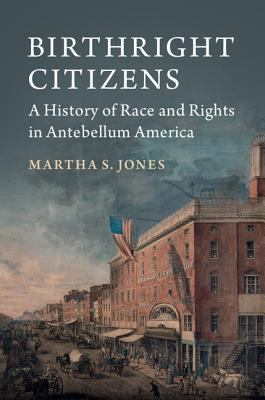
Jones, Martha S. Birthright Citizens: A History of Race and Rights in Antebellum America. KF4757 .J67 2018.

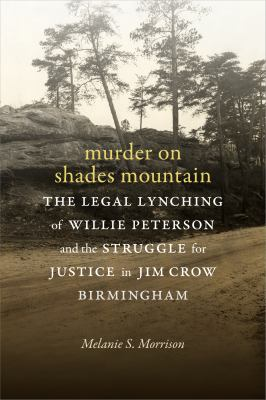
Morrison, Melanie. Murder on Shades Mountain: The Legal Lynching of Willie Peterson and the Struggle for Justice in Jim Crow Birmingham. KF224 .P48 M677 2018.

Smith, Dale Edwyna. African American Lives in St. Louis, 1763-1865: Slavery, Freedom and the West. F474 .S29 S75 2017.

ACC’s library has many more print and electronic books about African American history, as well as articles from scholarly journals, videos, and more. If you would like additional resources, please stop by any ACC library for help at the reference desk, or chat with us online!

Monday, November 25, 2019

Mark Twain’s birthday

November 30th is Mark Twain’s birthday!


Celebrate Mark Twain's birthday by reading about his life and work.


Biographical Information

Library Services has many resources to help you find biographical information about Mark Twain, facts such as his real name is Samuel Langhorn Clemens and that he adopted the pen name Mark Twain after being a steamboat captain on the Mississippi. Mark Twain is "a term from his riverboat days that means 'two fathoms deep' or 'safe water'" (Bloom).

Mark Twain is featured on the Bloom’s Literature home page as one of their Most Studied Authors, where you can find more background information, criticism, images, and more.

You can also dive into the details of his life by reading his autobiography. The most recent is a 2 volume set that Twain insisted not be published for 100 years after his death.  
Harriet Elinor Smith, ed.
University of California Press, 2010
Call Number: PS1331 .A2 2010
Available at RRC, RVS


Autobiography of Mark Twain. Volume 2
Benjamin Griffin and Harriet Elinor Smith, eds.
University of California Press, 2013
Call Number: PS1331 .A2 2013
Available at HLC, RVS


Literary Criticism

To read literary criticism about Twain’s work, sources like Bloom’s Literature or Literature Criticism Online will have a number of articles about Mark Twain, his characters, and the themes found in his works.

There are many other biography and literary criticism e-Resources, so be sure to visit the Literature and Literary Criticism databases-by-subject page.

Works by Twain

If you prefer to celebrate by curling up with some Twain classics, Library Services has many copies of his work in both print and electronicUse this Titles by Mark Twain link to view titles available through Library Services.


Works Cited

Bloom, Harold, ed. Mark Twain. Philadelphia: Chelsea House Publishing, 1999.

Bloom's Major Novelists. Bloom's Literature. Web. 17 Nov. 2014.